
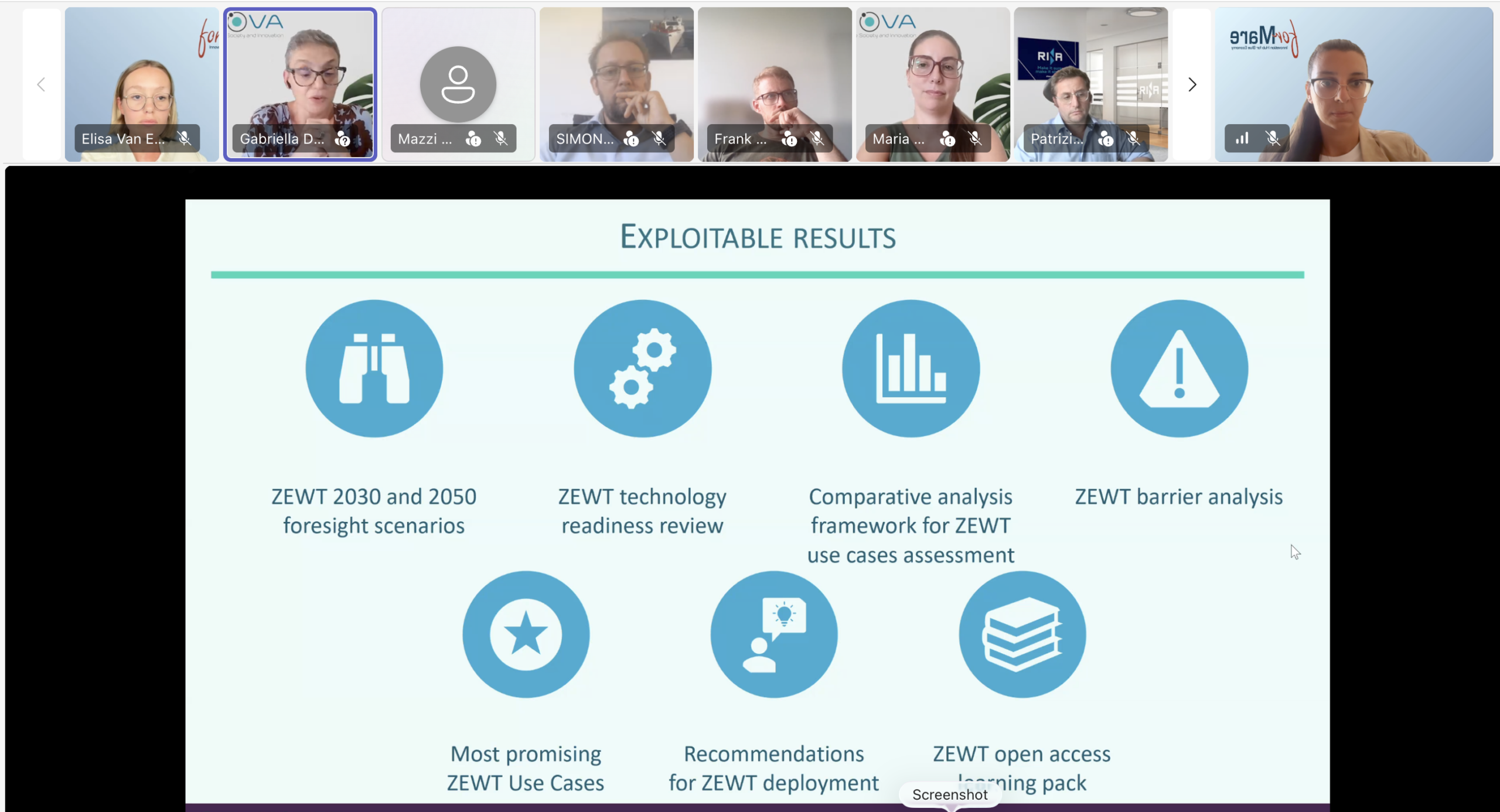
On 16 September 2026, the TRUSTEE project hosted its first online webinar, “Pathways toward ZEWT: Trends, Readiness and Transition Mechanisms for 2030 and 2050.”
The event gained the interest of over 50 stakeholders from across the waterborne transport ecosystem to examine how the sector can progress towards zero-emission operations. The discussion focused on the technologies, infrastructure, regulatory conditions and investments needed to support credible transition pathways for 2030 and 2050.
Moderated by Elisa Van Engelenhoven from ForMare, the webinar opened with an introduction by TRUSTEE Project Coordinator Gabriella Duca from ISSNOVA, who presented the project’s objectives, activities and expected results.
From fleet transformation to transition pathways
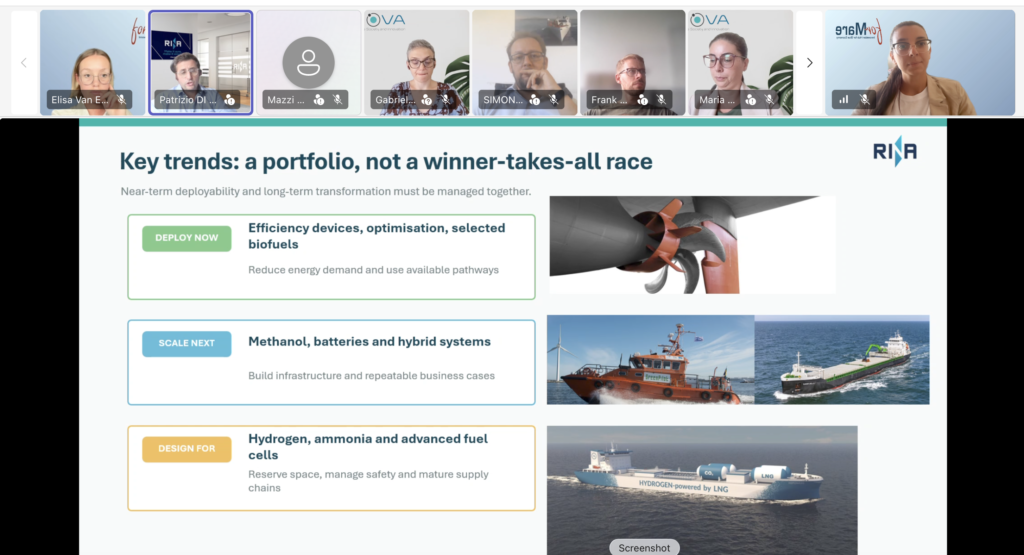
Patrizio Di Francesco from RINA set the scene by examining the main trends shaping fleet transformation. His presentation highlighted that the transition extends beyond replacing one fuel with another. It requires coordinated progress across vessels, energy supply, port infrastructure, operational practices, regulation and workforce skills.
The existing fleet will continue to play a central role in the coming years. Retrofit solutions, energy-efficiency measures, hybridisation and digital optimisation will therefore be essential to achieving near-term emission reductions. At the same time, new vessels must be designed with sufficient flexibility to accommodate future fuels and technologies as they mature.
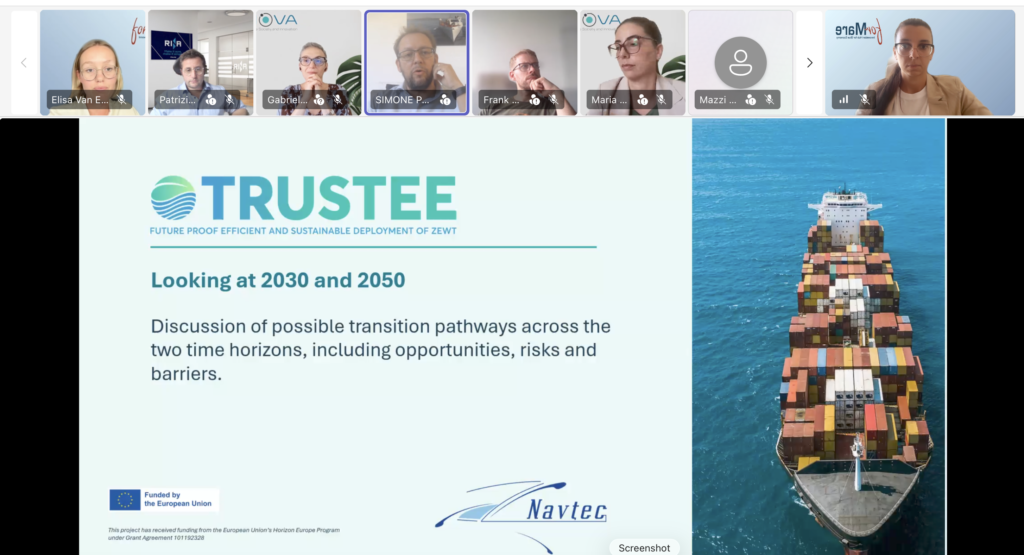
Simone Panfiglio from NAVTEC then presented possible transition pathways for the project’s five use cases: general cargo vessels, tankers, passenger ships, inland waterway vessels and special-operation vessels.
The analysis distinguished between two different transition horizons. Pathways towards 2030 will primarily rely on deployable solutions such as efficiency technologies, retrofit-compatible fuels, batteries and hybrid systems. Looking towards 2050, the transition will require greater integration between ship design, alternative fuels, port infrastructure and energy systems, with solutions such as e-methanol, ammonia, hydrogen fuel cells and battery-electric propulsion becoming increasingly relevant according to the vessel segment and operational profile.
Stakeholder perspectives on the transition
Maria Vittoria Gargiulo from ISSNOVA presented the first insights from the TRUSTEE Stakeholder Survey, which represents the starting point of the project’s wider consultation process.
The preliminary results confirm that the main barriers to zero-emission waterborne transport are not limited to vessel technology. Financial constraints, energy and grid capacity, fuel availability and infrastructure readiness emerged as particularly important challenges.
The survey also highlighted the need to address safety, regulation, workforce skills and public acceptance from the beginning of the transition process. These factors must be considered as integral parts of future vessel–port–energy systems rather than as issues to be addressed only after technological solutions have been selected.
Key messages from the webinar
The discussion highlighted four main messages:
- Achieving zero-emission waterborne transport requires the transformation of the entire maritime ecosystem, including vessels, ports, energy infrastructure and regulatory frameworks.
- Near-term progress will depend on combining retrofit solutions, cleaner fuels, energy-efficiency technologies and operational optimisation.
- Pathways towards 2050 will require the large-scale availability of low- and zero-carbon fuels, suitable port infrastructure and vessels designed around new energy systems.
- Financial viability, fuel availability, grid capacity, safety and workforce readiness may represent greater barriers to deployment than the maturity of individual onboard technologies.
TRUSTEE would like to thank Gabriella Duca, Patrizio Di Francesco, Simone Panfiglio and Maria Vittoria Gargiulo for sharing their expertise and insights, as well as all participants who contributed to the discussion.
Next stop: Rome, 26–27 November 2026
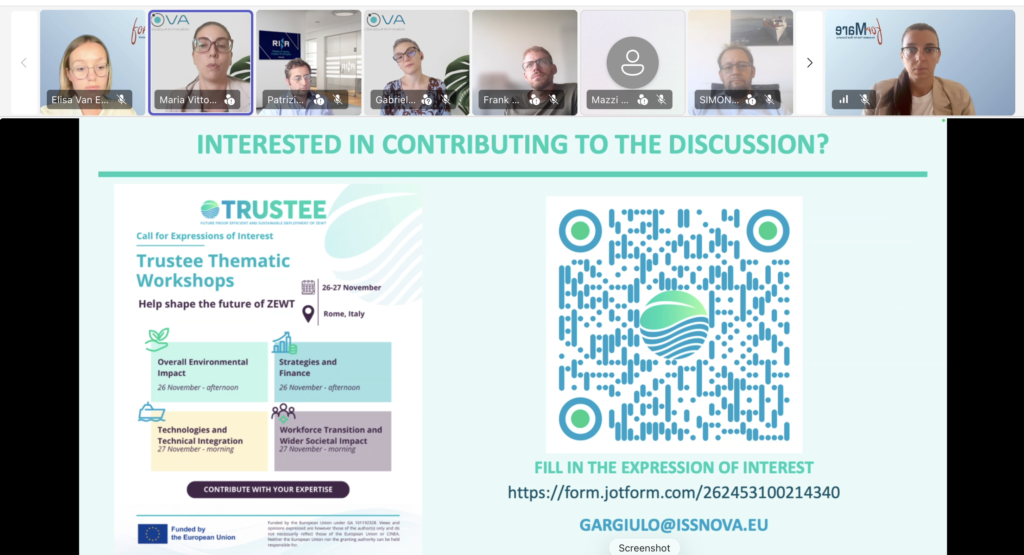
The next major milestone in the TRUSTEE stakeholder consultation will be the Thematic Workshops taking place in Rome on 26 and 27 November 2026.
The workshops will bring together industry representatives, researchers, policymakers and other relevant stakeholders to discuss four interconnected dimensions of the transition:
- Overall Environmental Impact;
- Strategy and Finance;
- Technologies and Technical Integration;
- Workforce Transition and Wider Societal Impact.
Interested stakeholders can submit an expression of interest to be considered for participation: https://form.jotform.com/262453100214340.
Stay connected with TRUSTEE
Subscribe to the TRUSTEE newsletter to receive the webinar materials and updates on the upcoming Stakeholder Workshops: Subscribe to our newsletter.
Follow TRUSTEE on social media:
- LinkedIn: https://www.linkedin.com/company/trustee-project/;
- X: https://x.com/Project_TRUSTEE;
- Instagram: https://www.instagram.com/project_trustee/.
Webinar materials are now available. Download your PPTs below!